Home Blog Page 39

Where Have All The Bad Scientific Talks Gone?

0

Science meetings should be more than a space for self-promotion and dullness.

No more room for bad talks

Probably you have noticed that there is no room for bad talks at scientific meetings anymore. Where did all the average, or even the plain good, talks go? You only ever hear of “great” presentations.
The talk ends, here comes the first question: “thanks for the excellent presentation…” The second question: “thanks for the great presentation…”
Three quarters of the audience were bored to death, but it was an excellent talk. Half of the participants had no beeping idea of what that grey-suited guy was talking about, but what an amazing presentation.
Are all scientific presentations that good, sorry I meant: that excellent?
Seriously, there must be a mean level of quality. After all, eminent scientists can be crappy speakers, and eloquent speakers are not always a reflection of their contributions to a research field. Therefore, we should start hearing fewer “thanks for the excellent presentation” nuisance and more of old-fashion questioning and answering.  Scientific meetings are becoming the ground for banal exchanges of mutual validation.

Too much pop, a little more rock please

Hey, but as much as we enjoy an excellent presentation, let’s not forget all those first-rate questions from the audience.
“That’s a good question!” Says the academic prophet and even the mortal student at the podium. Suddenly, I hear so many good questions that I am also starting to wonder: “Where did all the bad questions go? What about the pointless questions? The “I know it too” questions? The questions to make sure that your colleagues or the speaker notice your attendance? What about some Marx Brothers or Cantinflas style of questions?” I miss those types of questions.
But wait a second; they are still with us. I hear them all the time! Or maybe this is just scientists being sarcastic. “Thanks for the excellent presentation, I was bored out of my skull, here is my question”. Or, from the side of the speaker: “ah that is a good question, and could you please stop behaving as if you were clueless?”
I want a little more no-nonsense attitude, and even wittiness, in scientific conferences. A little less self-marketing and crowd-pleasing statements please. Too many Taylor Swifts and Ed Sheerans in the crowd and at the stand of scientific research. We need many more Joe Strummers, Noel Gallaghers, Patti Smiths and Johnny Rottens of science.
OK, maybe you are right, just a few Johnny Rottens in science will suffice.
Or perhaps this is a well-intentioned effort to be kind and polite to each other. Do not get me wrong. Being nice is good. I mean excellent. But, nah, during coffee breaks I have heard plenty of frank opinions about presentations (and their accompanying questions!).

Excellent is the new average

We are in the age of excellence, in which almost everything is ground-breaking. Excellent is the new average.
These are times when sounding like you are right is more important that doing the right thing. But doing and saying the right thing means expressing something in an honest way. The problem is that intellectual honesty sometimes hurts: other people’s egos and possibly your own career prospects.
These are the days of fantastic. These seem to be times when having an opinion automatically makes you an expert, a visionary.
Everything is disruption without even making a splash.
Old are the days of average, heart-felt disagreement and intellectual discomfort. Maybe gone are the days when average was common, good meant good, and excellent was the tail of the statistical distribution. Excellent was not the average.
[su_lightbox src=”https://www.youtube.com/watch?v=IzPcu0-ETTU”]Edward O. Wilson[/su_lightbox], one of the world’s most admired scientists, advised young researchers that “the greatest proportion of moral decisions you will be required to make is in your relationships with other scientists”1.  And indeed this is a vital challenge, not only because science is above all a social networking endeavour, but also because an awareness of this reality may regrettably lead us to over-emphasize the importance of looking or sounding good to others.
And perhaps it is such an anxiety to find a cosy place in the nest of consensus among “peers” that is creating so much delusion.
We need to re-discover average, good and could-be-better. We can do it sincerely, kindly and with rational purpose. Only this way we will be able to spot the truly great.
 
Source:
1 Edward O. Wilson (2013). Letters to a young scientist Choice Reviews Online, 51 (02), 51-51 DOI: 10.5860/CHOICE.51-0846
 
This article was written by: 
Francisco Azuaje, Senior Researcher at Luxembourg Institute of Health (LIH)

How Einstein Could Still Save the Earth

Einstein’s seminal work, known today simply as “General Relativity (GR),” celebrates its 100th birthday this year; it’s only fitting that Science then vindicate his theory once again on this centennial, this time providing proof of not only the behaviour of gravity waves but also of the existence of black holes.

The actual discovery was in fact made in September of last year, using a very special “telescope” – of sorts – called the “Laser Interferometer Gravitational-Wave Observatory” (LIGO for short; in other words, it’s a telescope that can “see” gravity using lasers).

It detected gravity waves from the merger of two black holes; the “larger” was 36 times more massive than our Sun, while the “smaller” was only 29 times more massive.  The final product was a black hole 62 times Solar-mass, with a whopping three whole Solar masses-worth of gravity waves emitted during the merger.

Traveling the many thousands of light-years to reach Earth, those gravity waves were a mere 35 to 250 Hz upon detection – the waves themselves are only on the order of ~1×10-21 (m). LIGO having been able to detect such waves of ~1×10-21 m, as predicted from General Relativity’s application to black holes, thus gives pretty solid credence to General Relativity itself as well as for black holes and their behaviour as worked out by Karl Schwarzschild.

Now, here is where it could get pretty cool: Why not use LIGO to sweep the skies above for solitary black holes in general, if possible? The biggest threat by black holes to our planet – our whole Solar System, really – is that they’re exactly that. Black. Their very physics prevents them from emitting light, so one could approach us and we’d never know until too late.

Their stupendous gravity is also bad news, as it can use said gravity to tear our whole Solar System apart, literally – the slowest, most painful death physically possible, because from our perspective the process would literally take forever.
Best case scenario is that the black hole flings Earth out into the depths of interstellar space, becoming a frozen-solid, rogue planet. Worst case is the black hole eats us up.

If solitary black holes also emit gravity waves of their own and if LIGO could be adapted to pick and determine the source of those waves, that would certainly be another big step. Even better, if there is a way to determine the nearness of said black holes via their emitted waves then we could even have an early-warning of sorts should any rogue black holes try to catch us off-guard.

100 years on, and Einstein may still be able to better Humanity…


Sources:
Abbott, B. (2016). Observation of Gravitational Waves from a Binary Black Hole Merger Physical Review Letters, 116 (6) DOI: 10.1103/PhysRevLett.116.061102
Emanuele Berti (2016). Viewpoint: The First Sounds of Merging Black Holes APS Physics 9 (2016) 17 arXiv: 1602.04476v2
Schwartzschild wiki
General Relativity wiki
Special Relativity wiki
Physics of back holes wiki
Death by neutron star youtube

Discrete Analysis Revolutionizes Publishing Landscape

Sometimes, it does take a mathematician to make us do the math. In January 2012, Timothy Gowers, a British mathematics professor at the University of Cambridge, called for a boycott of Elsevier on his personal blog. He criticized the high prices practiced by the Dutch publisher and the difficulty in finding out how much libraries are actually paying for its services, which come often entangled in bundle subscriptions. At the same time, Elsevier, as the majority of publishers, does not pay for the peer-reviewing process. Looking at all those numbers, something doesn’t add up. Gowers decided to make his voice heard. As he claimed, he was not ‘only going to refuse to have anything to do with Elsevier journals from now on, but (he was) saying so publicly.


Soon after, [su_tooltip style=”green” position=”north” shadow=”no” rounded=”yes” size=”3″ content=”The Costs of Knowledge boycott is an academic protest against Elsevier’s business practices. Researchers criticize Elsevier’s high subscription prices, ‘bundle’ subscriptions, and its support for SOPA or PIPA acts. ” close=”yes”] The Costs of Knowledge[/su_tooltip] statement was released. 34 prestigious mathematicians joined Gower’s boycott, refusing to either submit their articles to Elsevier, referee for them, or join their editorial boards. More than a question of numbers, the Elsevier boycott was a question of principles that the mathematicians’ community represented the noblest way possible. Today, four years after the signing of the statement, more than 15 thousand researchers have joined the Elsevier boycott, and every researcher is free to do so, via The Costs of Knowledge’s website. [su_quote cite =”‘The Costs of Knowledge’ Statement of Purpose” url=”https://gowers.files.wordpress.com/2012/02/elsevierstatementfinal.pdf”] The alternative is to continue with the status quo, in which Elsevier harvests ever-larger profits from the work of us and our colleagues, and this is both unsustainable and unacceptable.
[/su_quote]


Discrete Analysis

Now, Gowers has a new project in hands: the launching of Discrete Analysis mathematics’ journal. Once again, Gowers challenges the traditional publishing models, this time with a journal that is neither published nor electronically hosted but rather consists of a list of links on arXiv.


How exactly does the publication process work? Discrete Analysis will be hosted on a publishing platform called Scholastica, which is also responsible for the refereeing process. Besides, the articles in the journal will be based on the [su_tooltip style=”green” position=”north” rounded=”yes” size=”3″ title=”ArXiv” content=”ArXiv is an open access e-print archive and distribution server for research articles in the fields of physics, mathematics, computer science, quantitative biology, quantitative finance, and statistics. It is owned and operated by Cornell University ” close=”yes”]arXiv model[/su_tooltip], an electronic archive and distribution server for research articles. Gowers agrees that this model might be a novelty, but hopes ‘that in due course people will get used to this publication model, at which point the fact that Discrete Analysis is an arXiv overlay journal will no longer seem interesting or novel, and the main interest in the journal will be the mathematics it contains.


The Discrete Analysis journal represents a new model of Open Access publishing: the Diamond model, meaning that the articles are made freely available both to the reader and to the authors. The costs of running the journal will be significantly lower than those of traditional publishers. Scholastica does charge a small amount per article submission (10$ per article, 100 times less than a more conventional journal). Currently, these costs are being covered by a grant from Cambridge University, which Gowers expects to be sufficient to cover the first 500 submissions. After that, Gowers believes he will find additional funding or, worst case scenario, he will ‘have to ask people to pay an amount roughly equal to the cost of a couple of beers to submit a paper in a few years’ time.

Peer review, updates and attractive design

The articles submitted to Discrete Analysis will be subjected to a peer-review process, identically to what happens in more conventional journals. Gowers defends that the peer-review process is one of the features that distinguish this journal from a mere list of preprinted links. In addition, Discrete Analysis enriches its webpage by adding an “Editorial Introduction” to each article, therefore providing access to interesting editorial information that, in the current publishing system, never reaches the reader. The arXiv model also allows for an innovative feature: the possibility for updated versions of the articles. While in the current publishing models, an article is a rather strict final product, the arXiv model will keep the reader informed about the latest updates.
If a list of preprints makes you think of a boring website, think twice. Scholastica was responsible for the website design (Gowers says they see it as an investment), making it quite distinguishable from the majority of mathematicians’ journals: it has an attractive visual interface and enables the reader to easily explore the content without having to click on every link.


All these characteristics stressed Gower’s view that ‘the cheapness of running the journal is completely compatible with high quality. As for the articles submission criteria, Gowers does not want to put the standards so high that they cannot publish anything, but he sets the bar high enough for wanting ‘genuinely interesting papers’.
There is no doubt that the Open Science movement is growing bigger every day. Discrete Analysis is one perfect example of that. Beware greedy publishers: changes are on the way and they will definitely not be discrete.
 
Watch Timothy Gowers talk about the importance of Open Science and Elsevier boycott:
[su_youtube_advanced url=”https://youtu.be/Tz2AwZhR3to?t=7m59s” width=”600″ height=”400″ responsive=”no”]
 
 
Sources:
Discrete Analysis homepage
Gowers’s Weblog
arXiv
 

Featured image from Scholastica

New Open Access Roadmap

The European University Association (EUA) came up with a new roadmap to assist European universities’ transition towards Open Access (OA). This OA roadmap, which sets the future direction of OA in European universities, is based on the EUA’s expert group agreement on Science 2.0 initiative, the EUA said.


The EUA’s new roadmap primarily focuses on open access to research publications; its prime focus’ areas are open access to research data, copyright, data protection, and text and data mining. The EUA plans to implement its roadmap in consultation with major stakeholders: universities, publishers, and funding agencies. According to the EUA, technological advancements ushered in a new era of scholarly publishing, dissemination, and consumption, which requires a change in the classical publishing model. The time is ripe for publishers to embrace new realities: publishing or accommodating open access. In this regard, the EUA is determined to facilitate a fair and transparent platform that serves all players.


In its effort to implement the roadmap, the EUA set its priority areas. In the coming twelve months, it has plans to monitor institutional OA policies and map the European Union’s OA landscape. It will also facilitate a platform for institutions’ dialogue, aimed at ‘sharing good practices of “big deal” negotiations. These ‘big deal’, or bundle, negotiations help universities get better journal subscription fees deals with publishers. With the bundle negotiations, both universities and publishers get a chance to make a good deal: publishers sell their highly demanded journals along with low demanded journals in the same package, for a reasonable price for universities.


Moreover, the association hopes to engage in a dialogue with other pertinent stakeholders in the field. It will also support the development of European OA policies and infrastructures. The implementation of the roadmap, primarily in public universities, requires the support of politicians. That’s why the EUA has put a plan in place to engage politicians for ‘a fair, balanced and innovative publishing system’. This process of engagement might take different forms: seminars, dialogues and symposiums to create awareness of open access.


The EUA’s decision is a big boost for open access. Its roadmap has the potential to accelerate the move towards a fully open access world, while, at the same time, sends an unequivocal message to publishers who still favor the status quo. Moreover, it can be a triggering factor that other university associations (in America, Asia, and Africa) will reproduce.
Source:
http://www.eua.be/Libraries/publications-homepage-list/eua-roadmap-on-open-access-to-research-publications.pdf?sfvrsn=4
 

Schizophrenia Killed The Cat

I was sitting on a chair with the cat on my lap, when I stumbled upon a recent study that found no connection between schizophrenia and the parasite Toxoplasma gondii. I immediately began to laugh out loud, and I suspect even kitty cat did. It felt like an ironical revenge against many science writers. I know, this is mean, but if you happened to have read my previous article “Busting the myth: do cats cause schizophrenia?”, you would understand my point and how little I felt sorry for the writers that advertised how cats will turn you into a lunatic. However, scientists always need to slow down and reduce the initial excitement to avoid being fooled. Let’s briefly summarize the whole toxoplasma-cat-schizophrenia situation.

Why blaming the cat?

Last summer hundreds of popular science articles claimed that cats literally drive you crazy, as proven by a scientific research. As a matter of fact, the study performed statistical analysis on the output from different questionnaires given to families with a schizophrenic member. What they observed is that in 50% of the cases the family owned a cat. I know, cats can be pretty naughty, but they would not intentionally madden you. Hopefully. The underlying cause behind cat ownership and schizophrenia was believed to be the presence of T. gondii in cat feces. This parasite would conquer your mind and negatively influence your behavior. However, the latest research conducted by Sungden and her team found no evidence for a correlation between the parasite and schizophrenia or, in general, mental illness. Hence, how possibly could your kitty cat poo infect you?!
[expand]
T. gondii, the parasite responsible for toxoplasmosis, has managed to infect almost 1/3 of the world’s population and has developed mechanisms for escaping the human immune system.
Transmission of T. gondii to humans has been commonly associated with consumption of raw or uncooked meat, especially of pig or sheep. In addition, toxoplasmosis is strongly associated with human contact with cat’s feces, since T.gondii can live and reproduce in the digestive tracts of felids, a group of animals that includes cats. T. gondii reproduction in cat’s digestive system happens via tissue cysts, when the cat consumes an infected mouse.
Pregnancy is another way of toxolasmosis transmission. When a pregnant woman comes into contact with the parasite, there is a chance that the fetus also becomes infected, by direct transfer through the placenta. Toxoplasma_gondii_Life_cycle_PHIL_3421_lores
 

source:CDC/Alexander J. da Silva, PhD/Melanie Moser [/expand]

What seems odd, however, is that for over 60 years we believed T. gondii could cause mental disorders, and there are about 40 reports supporting this view. White flies in scientific experiments are generally labelled as errors, and in biological systems this is more common than you would expect. Contaminations, wrong sampling, false positive, false negative are like the dozen of uninvited guests that always show up at parties. What you do is simply disregard them. However, sometimes they may expose flaws from precedent studies, errors that may have propagated, and reveal that the king is naked. In this case, what is the difference between this latest study and the preexistent bunch of literature? Let’s have a look at how the experiments were designed.
 

A new study to the rescue

One of the major difference between the recent Sugden et al. (2016) study and the previous ones is the sampling strategy. Most of the earlier investigations looked at schizophrenic populations and determined how frequent the infection from T. gondii was. This means they checked the probability of the infection given the disease. Whereas the new research did the opposite: they took a random group of people and they checked if they were infected and if they had any mental impairments, which means determining the probability of the diseases given the infection. Nonetheless, there are various strains of T. gondii, some more aggressive than others. Karin Sugden and her co-workers found that about 30% of their participants were infected, however the percentage of identified schizophrenics was much lower than that. This could indicate that only a few strains of T. gondii can alter your mind, but the study did not determine which ones.
Another difference is the timeframe considered. Past studies combined together people from different ages that suffered from mental disorders at any time of their lives. On the other side, the new study looked at people aged 38 only, their medical history of future issues were not considered. Different approaches, different goals, different results.
What does all of it mean? Does the parasite T. gondii cause mental issues or not? I know you want a clear answer. The general belief is that science gives clear answers, but I am afraid I have to disappoint you: researchers are never sure their conclusions are the real ones, and most of the time they provide more new questions than answers. They are always waiting for other studies to confirm or confute their ideas. Future studies will tell us more, and one day we may know if there is a relationship between cats, the parasite and mental impairments. Biased as I may be, I like to believe that having a pet will never cause any harm. What I can recommend, however, is to not to eat your cat poo while we wait for new studies.
Sources:
Fuller Torrey, E., Simmons, W., & Yolken, R. (2015). Is childhood cat ownership a risk factor for schizophrenia later in life? Schizophrenia Research, 165 (1), 1-2 DOI: 10.1016/j.schres.2015.03.036
Sugden, K., Moffitt, T., Pinto, L., Poulton, R., Williams, B., & Caspi, A. (2016). Is Toxoplasma Gondii Infection Related to Brain and Behavior Impairments in Humans? Evidence from a Population-Representative Birth Cohort PLOS ONE, 11 (2) DOI: 10.1371/journal.pone.0148435
Image Credit: Louis Wain [Public domain], via Wikimedia Commons
 

Ravens Can See Themselves As Someone Else

2

Ever wondered what it might be like to see things as a cat, or dog, or as your favourite animal?  Turns out that ravens can do the same – though at a much simpler level.
This is called “Theory of Mind (ToM),” and is a trait that has been proposed to exist in certain great ape species as well as several monkeys.
The study was led by Dr. Thomas Bugnyar of the University of Vienna, and it involved testing a number of ravens in a laboratory setting – using two rooms separated by a small peep-hole.  The test-subject would be placed in one of the rooms, alongside a stash of food.
Ravens will guard their food stash whenever they see other ravens nearby.  However, they WON’T engage in that behaviour if they can only hear raven-calls.  In the room with its stash, the raven showed no such behaviour so long as the peep-hole was kept shut as raven-calls were coming from the other room next door.
Once the peep-hole was opened, though, and the test-raven could glance into that other room, then the guarding actions began.
What makes this an example of ToM, and not simply defensive behaviour as has been proposed, among other things such as familial behaviour – especially with primates – is that the sounds were mere recordings on tape.  The test-raven had no visual confirmation that there was indeed another raven in that other room hungry for its food, yet it would still act as if there was; perhaps thinking that the would-be raven was hiding just out of its range of vision through that tiny peep-hole.
If this study is as unique as it is claimed to be, then it certainly stands as another, little piece of evidence that we humans are not as uniquely endowed mentally as we’ve always thought.  While ravens’ ToM is currently restricted to other corvids, the fact that ravens are able to conceive that another bird could be watching them is in itself an important discovery.
The next step from here is likely to re-evaluate this cognitive ability in primates, and also to see if other intelligent animals such as dolphins and octopi have this trait.  Finally, since we presently do not know when this trait first expresses in our own species, to actually conduct this sort of test on human infants should also be worth-while.
Another avenue to take here would be to try to figure out what kind of evolutionary steps are usually required in order for the first inklings of ToM appear in a species, although certainly there are a number of hypotheses out there proposed already – for example, in Bugnyar’s study in particular, it is offered that being able to predict which food sources may be competed over in a given season or year is an important, likely primary evolutionary advantage that can certainly aid in the particular raven’s ability to ensure it can always have access to sufficient sustenance.
Source
Bugnyar, T., Reber, S., & Buckner, C. (2016). Ravens attribute visual access to unseen competitors Nature Communications, 7 DOI: 10.1038/ncomms10506
Ravens can theorize about minds
Theory of mind
Image Credit: Ingrid Taylar / Flickr

Love? All You Need Is… Oxytocin!

1

Check the acknowledgments on any books and the last sentence will always be something like “Finally, I would like to thank XXX, who was always there cheering me up and stood by me through the good times and bad”. It’s no surprise, we have all been there: you are so grateful to your partner for being so supportive through hard times. You cannot even imagine how you could have managed it without him/her. After all, compassion and empathy is the foundation of love, and love is what makes us human, right? Wrong. Well, at least compassion and empathy indicate advanced cognitive abilities! Wrong, again.

The magical hormone

Consolation is a more primitive and less cognitive capacity than what we believe, that’s what a study from James P. Burkett and other researchers concluded. The research, which has just been published in Science, proved that cute little -and apparently dumb- rodents called Microtus ochrogaster can perceive when their partners are under pressure and act accordingly. Basically, when Mrs. Ochrogaster is stressed or anxious, Mr. Ochrogaster feels for her and takes care of his spouse and vice versa. Exactly like us. So what triggers this empathetic behaviour? The research team was craving for answers and hypothesised one specific hormone may be involved. So they examined again what Mr. & Mrs. Ochrogaster do when one of them is distressed, but this time the consoling partner was injected with an antagonist of the “empathy hormone”. This antagonist would produce the opposite effect and turn the supportive into an insensitive better (?) half. If their hypothesis would have been wrong, the rodent would still cuddle the beloved and apprehensive spouse. Instead, they were right: the hormone involved was exactly what they imagined! Are you guessing what the magical hormone is?
A song from a few years ago went something like this “Call it dumb, call it luck, call it love or whatever you call it but everywhere I go I keep oxytocin in my wallet”. You are right, the song was not exactly like that, but oxytocin was a plausible option. In fact, this hormone is what makes you desperately want to grab your partner’s hand, and the same one that makes you wear rose-coloured glasses, even if your partner is a dork… That is why some people call it the “love hormone”.

A love shot?

Does this mean that oxytocin will turn you into a sort of benevolent being, no matter what? Maybe not, let me tell you how the experiment on Microtus ochrogaster rodents developed. The rodents truly felt for their partners and took care of distressed family members, however they did not seem to show the same empathy towards strangers, oxytocin or not, even from the same species. Even more, similar rodents, Microtus pennsylvanicus, had a totally different behaviour and just didn’t even try to comfort their better halves. Beware: Mr. and Mrs. Pennsylvanicus’ marriage is not in crisis and they are a lovely couple, they just grew in different evolutionary and social contexts that did not encourage them to be so responsive. Macaques, that you probably believe are smarter than these tiny rodents, behave in the same exact way. This means that showing compassion has not much to do with intelligence. At least you can now explain why your dork partner is such a clever person but not so warmhearted, while your lover is so perceptive but sharp as a bowling ball… What about getting an oxytocin shot for Valentine’s Day?
Source
Burkett, J., Andari, E., Johnson, Z., Curry, D., de Waal, F., & Young, L. (2016). Oxytocin-dependent consolation behavior in rodents Science, 351 (6271), 375-378 DOI: 10.1126/science.aac4785

4 Ways Meat Industry Is Destroying The Environment

Until recently, oil and car industries were seen as the main culprits for climate change. But after an Inconvenient Truth, another documentary, Cowspiracy, has shaken common beliefs and changed the way we perceive global warming and sustainable practices. Read more about the effect of Cowspiracy in a twin-article United Academics published yesterday: A Steak A Day Keeps Sustainability Away.
The livestock production industry is now also publicly blamed for 4 negative effects on our planet:

1. Land use

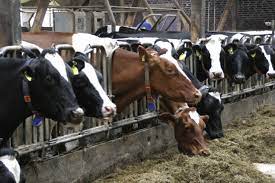
Livestock production is the largest land-use system on Earth. A report by the Food and Agriculture Organization (FAO) estimated that the cattle industry accounts for one-third of the land surface use on the entire planet: one single cow can use up to 20 thousand square meters of land. The effects of over-exploration are already being felt: 20 percent of the arable land is now degraded due to over-grazing, compaction, and erosion. FAO report also states that land use is now the major cause of biodiversity loss. In addition, deforestation affects water cycles, reducing infiltration and storage.

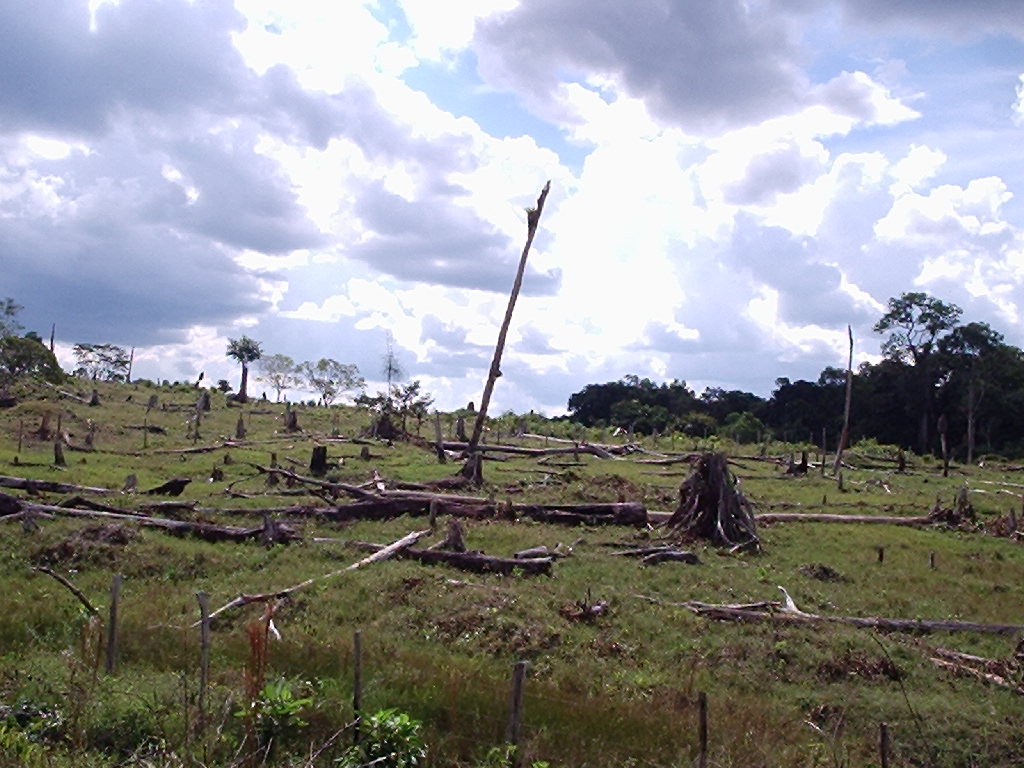
At the same time, deforestation is a major concern, especially in Latin America. 70% of previously forested lands are now turned into pastures and fodder crops. For instance, between 1994 and 2004, the land area devoted to growing soybeans, mostly used to feed cattle, in Latin America more than doubled to 39 million ha.

Deforestation of Rainforest. Credit: Daniele Gidsicki.

The WWF (World Wide Fund For Nature) organization states that around three-quarters of the global production of soy is turned into soy meal which is used for animal feed.

2. Water resources

Water resources are also being largely affected by the meat industry. The livestock sector is responsible for one-third of the freshwater usage on the planet and the production of one kg of meat can require as much as 20,000 liters of water, according to the UK’s Institute of Mechanical Engineers (IME).

The IME also estimates that 30-50% of all food produced is ‘lost before reaching a human stomach

If these numbers do not impress you yet, the producers of Cowspiracy give us a little perspective: in the US, while private houses consume about 5% of the water resources, animal agriculture accounts for more than 55%.

These and other facts, and it’s respective sources, can be found on the Cowspiracy website

Drought in Madagascar.

3. Greenhouse gas emissions

The numbers related to the impact of livestock production on the atmosphere are also impressive. According to FAO, cattle account for 18% of greenhouse gas emissions measured in CO2 equivalent, a higher share than transports, for example.  But in this industry, CO2 release is not the major concern; livestock production is responsible for 37% of all methane and 64% of all ammonia emissions.


According to the FAO report, methane is 21 times more effective in trapping heat in the atmosphere than carbon dioxide.

These emissions vary considerably between different animals. According to a study published in PnasJournal, the production of meat and eggs from monogastric animals, such as pigs or rabbits, has significantly lower emission intensities than milk and meat from ruminants, like cows or goats.

  Another disturbing aspect about the meat industry is the antibiotic over use. According to a report in the New England Journal of Medicine, more than 50% of the antibiotics produced in the US are used by the cattle industry on healthy animals.

The authors of the study estimate that emission intensities for global pork production are around 24 kg CO2 eq (equivalent) per kilogram protein, and for poultry meat and eggs, 3.7 kg CO2 eq per kilogram protein.

4. Antibiotics overuse

Antimicrobials are used by the livestock production industry as therapeutic agents for animal infections or, in the case of healthy animals, as a way of promoting growth and enhance feed efficiency. Antibiotics are administered through food and water and this ultimately reflects on the consumer: a recent study found that about 80% of supermarket meat in Washington DC area harbored antibiotic-resistant bacteria.  

This report also states that over 80% of infections with salmonella are acquired from food animals.

This study found salmonella isolates in 20% of the meat samples analyzed.

The majority of the drugs administered are identical or related to those administered to humans, which increases the concern for the development of antibiotic-resistance bacteria strains.

 
References

  • Herrero, M., Havlik, P., Valin, H., Notenbaert, A., Rufino, M., Thornton, P., Blummel, M., Weiss, F., Grace, D., & Obersteiner, M. (2013). Biomass use, production, feed efficiencies, and greenhouse gas emissions from global livestock systems Proceedings of the National Academy of Sciences, 110 (52), 20888-20893 DOI: 10.1073/pnas.1308149110
  • Gorbach, S. (2001). Antimicrobial Use in Animal Feed — Time to Stop New England Journal of Medicine, 345 (16), 1202-1203 DOI: 10.1056/NEJM200110183451610
  • White, D., Zhao, S., Sudler, R., Ayers, S., Friedman, S., Chen, S., McDermott, P., McDermott, S., Wagner, D., & Meng, J. (2001). The Isolation of Antibiotic-Resistant Salmonella from Retail Ground Meats New England Journal of Medicine, 345 (16), 1147-1154 DOI: 10.1056/NEJMoa010315
  • Tilman, D., Cassman, K., Matson, P., Naylor, R., & Polasky, S. (2002). Agricultural sustainability and intensive production practices Nature, 418 (6898), 671-677 DOI: 10.1038/nature01014
  • Donovan, C. (2015). If FDA Does Not Regulate Food, Who Will? A Study of Hormones and Antibiotics in Meat Production American Journal of Law & Medicine, 41 (2-3), 459-482 DOI: 10.1177/0098858815591528

A Steak A Day Will Keep Sustainability Away

Meat industry under pressure, after Cowspiracy revealed unsustainable practices.

Since we were little, we were taught that cows are happy big animals that give us milk for our breakfasts; chickens are clumsy, somewhat foolish, creatures that give us eggs for our omelets and pigs are our eternal fountains of bacon. And they all happily lived in Old Mac Donald’s farm. It was a cheerful picture. And climate change was not part of that picture.
Climate change has always been about reckless industries, polluting cars and oil magnates, all part of an inconvenient truth. But this image has been changing in the past years. Slowly, people are starting to realize that the meat industry is also part of this inconvenient truth’s club. It may even be the biggest stakeholder.

Cowspiracy – the turning point

For many, the turning point was Cowspiracy. In 2014, this Kip Andersen’s documentary brought to the public’s attention what few studies had already shown before: animal agriculture is the planet’s most destructive industry, even though it remains unchallenged by environmental organizations and governmental policies. All the overwhelming information presented in the documentary might make you doubt about the veracity of the facts but, on the Cowspiracy official website, the authors show every source they used to support their claims.
Cowspiracy’s controversial trailer:

The documentary seems to have sparked a change. After Cowspiracy more organizations, institutions and webpages started to raise awareness about the meat industry. One of them is James Smith. After having watched Cowspiracy, James created an infographic where you can grasp the impact of livestock product consumption in the UK. Once you open the page, numbers start running, showing the live impact of meat consumption in the UK.  After opening the infographic page, not all numbers shown start from zero. James explained United Academics this is a slight delay from the time you click on the page until it opens. James wants to raise awareness on this issue because he believes that each individual is capable of making a change, by slowly reducing their meat consumption.
The impact of livestock production is felt on different levels, from land usage and deforestation to water shortage, from antibiotics over usage to greenhouse gas emission. Tomorrow United Academics will publish an article that explains more specifically how the meat industry is destroying the environment.

Sustainable policies

Considering that the global production of meat is expected to more than double to 465 million tons in 2050, it seems crucial that changes are made (FAO’s Livestock long shadow report).
Obviously, the economic and social importance of the meat industry cannot be overlooked. It employs more than one billion people and directly supports the livelihoods of about 600 million poor smallholder farmers in the developing world.
At the same time, while the world population is rapidly increasing, the demand for livestock products have also been increasing, especially in developing countries. Thus, we face the challenging question of how to stop this ticking environmental timebomb without hurting the world’s economy and without compromising the nutritional needs of the ever-increasing world population. The application of sustainable policies for cattle industry and heavy fines for the law violators, as it happened for oil industries, is mandatory, but requires a serious political international commitment to fight big producers’ lobbying. The final consumer also plays a crucial role: responsible meat consumption will certainly help to control the demand for livestock products.
There is no reason for us to look away from all the data we have about meat industry. Why then do we still think about pollutant cars when we think about global warming? Why don’t the happy little cows, pigs and chickens also enter this scary picture?  The reasons are obviously complex, but the producers of Cowspiracy do not hesitate in giving us one: the big bosses of the major meat companies are trying to silence these facts through blackmails, threats and bribes. One of the interviewees even implies that the pressure to silence negative facts about the meat industry ‘starts at a local level and it goes all the way to the Congress’. Not even environmental organizations are safe. On the contrary: one of the major accusation is that organizations like Greenpeace are accepting money from the meat industry. These accusations were already rejected by Greenpeace itself.
Happy cows, pigs and chickens are not to blame. Rather, we need to ask consumers for more common sense, cattle producers for more responsibilities and politicians for more braveness.
References
Herrero, M., Havlik, P., Valin, H., Notenbaert, A., Rufino, M., Thornton, P., Blummel, M., Weiss, F., Grace, D., & Obersteiner, M. (2013). Biomass use, production, feed efficiencies, and greenhouse gas emissions from global livestock systems Proceedings of the National Academy of Sciences, 110 (52), 20888-20893 DOI: 10.1073/pnas.1308149110
Gorbach, S. (2001). Antimicrobial Use in Animal Feed — Time to Stop New England Journal of Medicine, 345 (16), 1202-1203 DOI: 10.1056/NEJM200110183451610
White, D., Zhao, S., Sudler, R., Ayers, S., Friedman, S., Chen, S., McDermott, P., McDermott, S., Wagner, D., & Meng, J. (2001). The Isolation of Antibiotic-Resistant Salmonella from Retail Ground Meats New England Journal of Medicine, 345 (16), 1147-1154 DOI: 10.1056/NEJMoa010315
Tilman, D., Cassman, K., Matson, P., Naylor, R., & Polasky, S. (2002). Agricultural sustainability and intensive production practices Nature, 418 (6898), 671-677 DOI: 10.1038/nature01014
Donovan, C. (2015). If FDA Does Not Regulate Food, Who Will? A Study of Hormones and Antibiotics in Meat Production American Journal of Law & Medicine, 41 (2-3), 459-482 DOI: 10.1177/0098858815591528

Are Metaphors Just Handy Tools In Science?

0

For science communicators, metaphors can be both fun and dangerous.

Metaphors are probably a storyteller’s second best friend. The work of scientists and science journalists alike is populated by metaphors. Metaphors come in handy, and frequently go hand in hand with the answer to the scientific question investigated.
Thus, scientists investigate cells that fight infections, molecules that have mechanisms and biological processes that talk to each other. Chemical substances represent the building blocks of molecular routes and pathways. Tumours are capable to network with other tumours and microenvironments. Bacteria seem to enjoy a social life. Mathematical formulas have parameters that are learned from data. Genes are transcribed. Wormholes connect points in space-time. There are algorithms that are trained to complete tasks and computer chips that are expected to behave like brains. Genomes are blueprints and codes, and even contain fingerprints.
All beautifully began with a big bang. And all will eventually end with a big crunch.

The folly of mistaking a metaphor for a proof

“Metaphors are dangerous and are not to be trifled with” because “a single metaphor can give birth to love”, the writer Milan Kundera alerts us. Even in science, they are not less important. Not less seductive, not less dangerous.
Metaphors are not to be messed with. They can downplay our ignorance, amplify delusions and undervalue the gravity of our dilemmas. A gratuitous metaphor can excessively dumb things down and worse: make us look dumber. Poorly selected or overused metaphors can also be insulting, condescending and plain ridiculous. And let’s not forget the folly of mistaking a metaphor for a proof, as French poet Paul Valéry put it.
On another level, the American biologist Stephen Jay Gould thought that metaphors represented the deep barriers to scientific progress. This is because the latter greatly depends on having access to the right metaphor, not only to the requisite information, and because “revolutionary thinkers are not, primarily, gatherers of facts, but weavers of new intellectual structures.”. Or to put it another way, ground-breaking scientific progress requires more than new data, it relies on new visions.

Bringing clarity to the opaque

Metaphors in science can also be fascinating, fun and intriguing. They send us to streets we did not know were safe or apt for walking. They can connect worlds apart, or things we did not know could be put together. Metaphors remind us of the uniqueness of objects and ideas, and in parallel, of their unexpected interdependence.
Mostly, their significance resides in their potential for bringing clarity to the opaque, a little more light to the necessarily complex. For the journalist or scientist communicator, a metaphor is a common trick to not scare the reader. It helps us relieve the anguish of wanting to know something without having to know a lot. For the scientist, a metaphor can also become the actual thing that is described or sought. The glue needed to synthesise what is commonly difficult to break apart. They are used as pictures to allow us to see clearer, more expressive, pictures
But in the end, for better or worse, metaphors can simply become well-established habits. A highly convertible currency: in and across communities. Something that is useful, or at least convenient enough, to keep around in the family. That almost weird, sometimes embarrassing, but always handy uncle sitting in the corner.
metaphors, science journalists, scientists
This article was written by: 
Francisco Azuaje, Senior Researcher at Luxembourg Institute of Health (LIH)